
Story Formats
Analyzing engagement data to define success metrics, identify opportunities for iteration, and establish best practices newsrooms can use to decide when and how a format should be applied. This approach replaces guesswork and ensures each story builds on the last.
At The Washington Post, more than 100 stories generating over 5 million views published in 2025 using story formats.
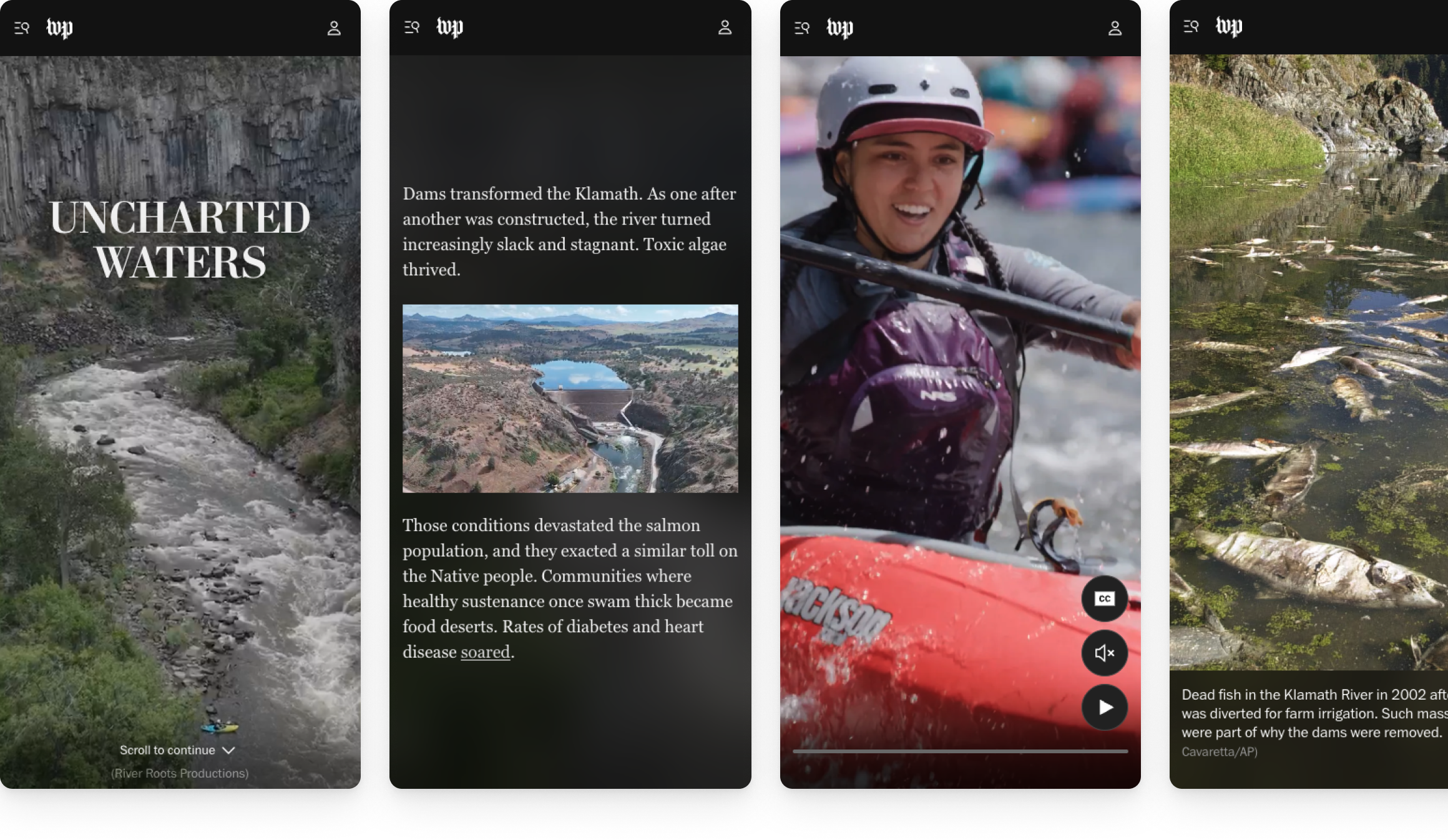
Snap Format
Structured in short, digestible slides, snap blends visuals and text into a seamless, one-directional narrative. Familiar UX patterns and intentional pacing help audiences absorb complex stories without feeling overwhelmed.
The result is journalism that feels native to modern media habits: visually cohesive and built for engagement.
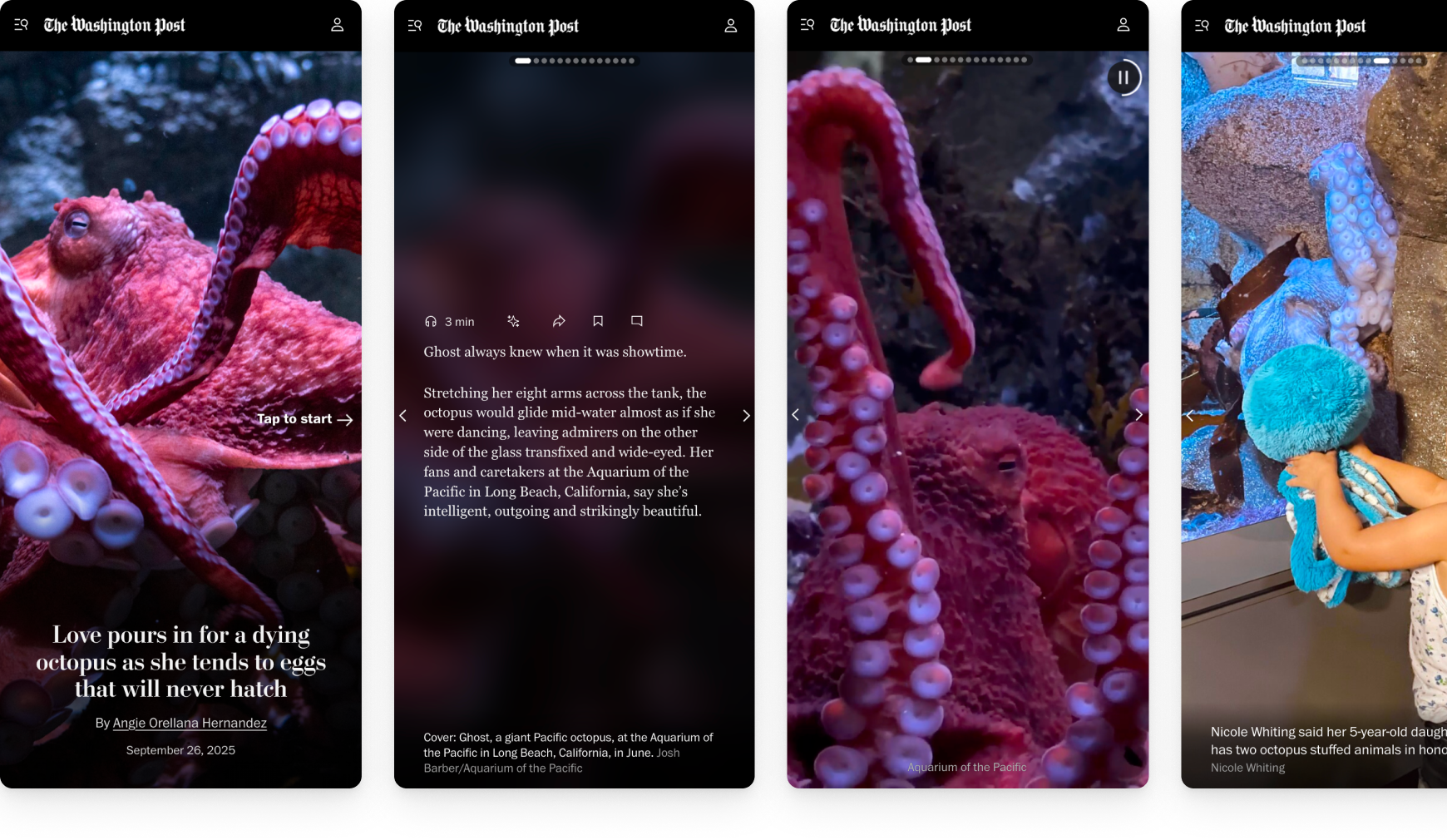
Tap Format
A visual-first storytelling format designed to immerse audiences through striking imagery with concise, transitional text only when necessary.
Its quick, sequential flow encourages exploration at pace, while simple, single-fact sentences keep momentum high and cognitive load low. Tap creates a clean, discovery-driven experience ideal for breaking news, cultural moments, or visually rich reporting.
Interactive Formats
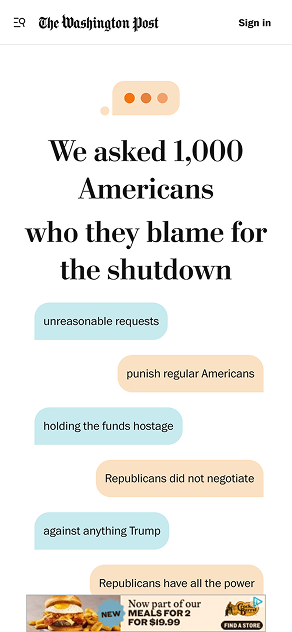
Establishing this scalable system gave the design team the opportunity to formalize recurring custom builds into repeatable formats. For example, our Flash Poll—a data visualization capturing how readers respond to major news moments—became a standardized format, enabling faster production and a consistent workflow for this coverage.
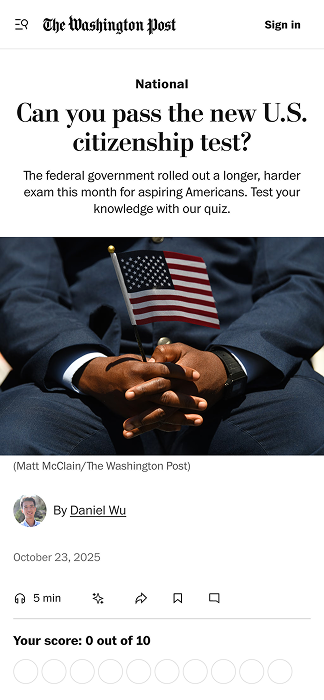
Other examples include Great Works in Focus, which allows readers to explore artwork in immersive detail through zoom and interaction, and our Quiz format, which continues to be one of our highest-performing engagement drivers.
Quiz
Flash Poll
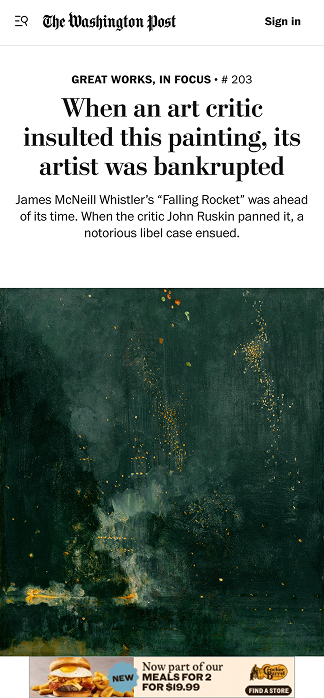
Great Works in Focus